
Dental in Mumbai

Dental Implant Treatment in Mumbai

Learn about Dental Implant Treatment in Mumbai, including symptoms, procedure options, recovery, cost guidance, and when to consult an expert doctor.

Need help choosing treatment?

Request a callback and we will help you connect with an appropriate doctor.

Take Appointment WhatsApp
Dental Implant Treatment

Overview

Dental implants are a type of tooth replacement option that involves surgically placing a small metal post into the jawbone and attaching a replacement tooth (crown) to the post. Dental implants are a popular treatment option because they look and function like natural teeth and can help preserve the integrity of the jawbone and surrounding teeth. A dental professional will first make an incision in the gum tissue to place a dental implant to expose the jawbone. They will then carefully drill a

What is it?

<section class="blog-details-area new ptb-100">
<div class="container">
<div class="row">
<div class="col-lg-7 col-md-7 pt-4 pb-4">
<div>
<img src="assets/images/img2.jpg" alt="service-details-img" class="servic-img">
</div>
<div class="dental-sec">
<p>Dental implants are a type of tooth replacement option that involves surgically placing a small metal post into the jawbone and attaching a replacement tooth (crown) to the post. Dental implants are a popular treatment option because they look and function like natural teeth and can help preserve the integrity of the jawbone and surrounding teeth.</p>
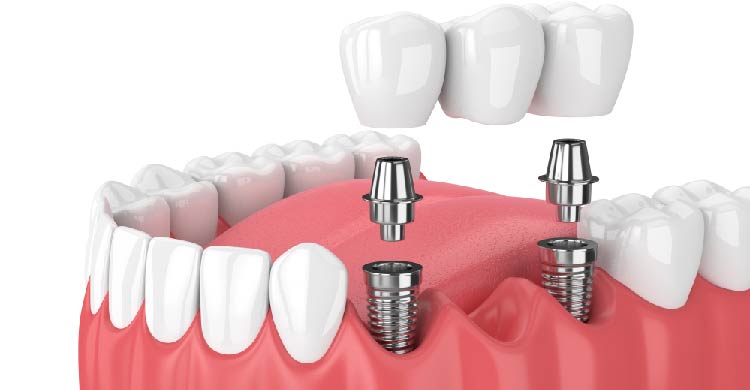
<p>A dental professional will first make an incision in the gum tissue to place a dental implant to expose the jawbone. They will then carefully drill a small hole into the jawbone and insert the metal implant post. The gum tissue is then closed over the implant, and the implant is left to heal and integrate with the jawbone. This process can take several months.</p>
<p>Once the implant has fully integrated with the jawbone, the dental professional will attach an abutment (a small connector piece) to the top of the implant, and then place a crown (a replacement tooth) on top of the abutment. The crown is custom-made to match your natural teeth' shape, size, and color, so it looks and functions like a natural tooth.</p>
<p>Dental implants can replace a single missing tooth or support a bridge, partial denture, or full denture. They are a long-lasting and effective tooth replacement option that can help restore your smile's function and appearance.</p>

<h4> Types Of Dental Implants</h4>
<p>There are several different types of dental implants that may be used, depending on the specific needs of the patient. Some of the most common types of dental implants include:</p>

<p class="bullet"><i class='fas fa-angle-double-right'></i><span>Endosteal Implants:</span> These are the most common type of dental implant and are placed directly into the jawbone. They are typically made of titanium or another biocompatible material and are shaped like small screws. Endosteal implants are used to support individual crowns, bridges, or dentures.</p>
<p class="bullet"><i class='fas fa-angle-double-right'></i><span>Subperiosteal Implants:</span> These implants are placed under the gum tissue but above the jawbone. They consist of a metal frame that is anchored to the jawbone, with posts that protrude through the gum tissue to hold the replacement teeth. Subperiosteal implants are typically used in patients who have insufficient jawbone height or density to support endosteal implants</p>
<p class="bullet"><i class='fas fa-angle-double-right'></i><span>Zygomatic Implants:</span> These are endosteal implants used to support dentures in the upper jaw when there is insufficient bone in the upper jaw to support traditional implants. Zygomatic implants are longer and thinner than traditional endosteal implants and are anchored to the cheekbone (zygoma) rather than the jawbone.</p>
<p class="bullet"><i class='fas fa-angle-double-right'></i><span>All-on-4 Implants:</span> This treatment option involves placing four endosteal implants in the jawbone and attaching a full arch of replacement teeth to them. This can be a good option for people who are missing all of their teeth in the upper or lower jaw and do not have enough healthy jawbones to support a full set of individual implants.</p>


<p>With all the different types of dental implants, the best one for you will depend on your individual needs and circumstances. Some of the factors that can influence which dental implant is the best option for you include:</p>

<p class="bullet"><i class='fas fa-angle-double-right'></i>The location of the missing tooth or teeth</p>
<p class="bullet"><i class='fas fa-angle-double-right'></i>The condition of your jawbone</p>
<p class="bullet"><i class='fas fa-angle-double-right'></i>The health of your gums</p>
<p class="bullet"><i class='fas fa-angle-double-right'></i>Your overall health</p>
<p class="bullet"><i class='fas fa-angle-double-right'></i>Your budget</p>

<h4>Are dental implants painful?</h4>
<p>Dental implants can be a surgical procedure, and as with any surgery, there is the potential for discomfort or pain. However, modern dental implant procedures are generally well-tolerated, and most people experience only mild to moderate discomfort during and after the procedure.</p>
<p>Your dental team will take steps to ensure that you are comfortable during the procedure. This may include the use of local anesthesia to numb the area, as well as pain medication to manage any discomfort after the procedure.</p>
<p>It is important to follow your dental team's post-procedure care instructions, including taking any prescribed pain medication as directed and practicing good oral hygiene to help minimize any discomfort and promote healing. If you experience excessive pain or discomfort, be sure to contact your dental team for guidance.</p>


</div>
</div>
<div class="col-lg-5 col-md-5">


</div>

</div>

</div>
</div>
</section>

Types Of Dental Implants

There are several different types of dental implants that may be used, depending on the specific needs of the patient. Some of the most common types of dental implants include:

Endosteal Implants: These are the most common type of dental implant and are placed directly into the jawbone. They are typically made of titanium or another biocompatible material and are shaped like small screws. Endosteal implants are used to support individual crowns, bridges, or dentures.

Subperiosteal Implants: These implants are placed under the gum tissue but above the jawbone. They consist of a metal frame that is anchored to the jawbone, with posts that protrude through the gum tissue to hold the replacement teeth. Subperiosteal implants are typically used in patients who have insufficient jawbone height or density to support endosteal implants

Zygomatic Implants: These are endosteal implants used to support dentures in the upper jaw when there is insufficient bone in the upper jaw to support traditional implants. Zygomatic implants are longer and thinner than traditional endosteal implants and are anchored to the cheekbone (zygoma) rather than the jawbone.

All-on-4 Implants: This treatment option involves placing four endosteal implants in the jawbone and attaching a full arch of replacement teeth to them. This can be a good option for people who are missing all of their teeth in the upper or lower jaw and do not have enough healthy jawbones to support a full set of individual implants.

With all the different types of dental implants, the best one for you will depend on your individual needs and circumstances. Some of the factors that can influence which dental implant is the best option for you include:

The location of the missing tooth or teeth

The condition of your jawbone

The health of your gums

Your overall health

Your budget

Are dental implants painful?

Dental implants can be a surgical procedure, and as with any surgery, there is the potential for discomfort or pain. However, modern dental implant procedures are generally well-tolerated, and most people experience only mild to moderate discomfort during and after the procedure.

Your dental team will take steps to ensure that you are comfortable during the procedure. This may include the use of local anesthesia to numb the area, as well as pain medication to manage any discomfort after the procedure.

It is important to follow your dental team's post-procedure care instructions, including taking any prescribed pain medication as directed and practicing good oral hygiene to help minimize any discomfort and promote healing. If you experience excessive pain or discomfort, be sure to contact your dental team for guidance.

Call Call Us
WhatsApp WhatsApp