
Overview
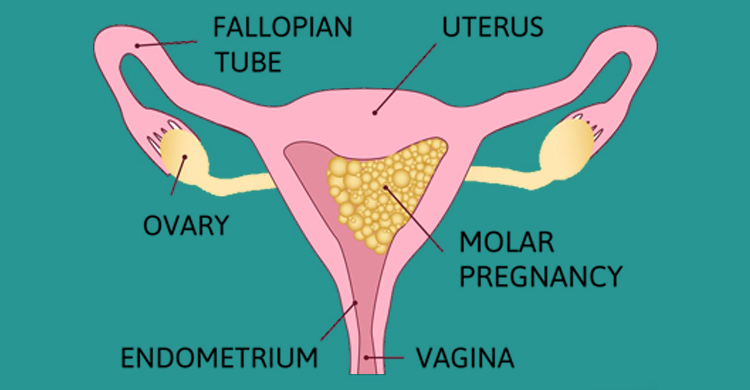
What is Molar Pregnancy? When an egg and sperm combine improperly during fertilization, a non-cancerous tumor develops instead of a healthy placenta. This condition is known as a "molar pregnancy." The pregnancy is terminated when the mole or tumor cannot nourish a growing embryo. Another name for it is a hydatidiform mole. Molar pregnancy comes in two forms: partial and complete. A partial one occurs when the embryo (fertilized egg) and placenta are both defective. There is no embryo but a dysf
What is it?
<div class="container">
<div class="row">
<div class="col-lg-7 col-md-7 pt-4 pb-4">
<div>
<img src="assets/images/molar-pregnancy.jpg" alt="molar-pregnancy.jpg" class="servic-img">
</div>
<div class="dental-sec">
<h4>What is Molar Pregnancy?</h4>
<p>When an egg and sperm combine improperly during fertilization, a non-cancerous tumor develops instead of a healthy placenta. This condition is known as a "molar pregnancy." The pregnancy is terminated when the mole or tumor cannot nourish a growing embryo. Another name for it is a hydatidiform mole.</p>
<p>Molar pregnancy comes in two forms: partial and complete. A partial one occurs when the embryo (fertilized egg) and placenta are both defective. There is no embryo but a dysfunctional placenta in a full molar pregnancy.</p>
<h4>What are the symptoms?</h4>
<p>The following are the most typical signs of molar pregnancy:</p>
<p class="bullet"><i class="fas fa-angle-double-right"></i>Vaginal bleeding throughout the first three months of pregnancy</p>
<p class="bullet"><i class="fas fa-angle-double-right"></i>Nausea and vomiting.</p>
<p class="bullet"><i class="fas fa-angle-double-right"></i>Preeclampsia (extremely high blood pressure).</p>
<p class="bullet"><i class="fas fa-angle-double-right"></i>High amounts of HCG</p>
<p class="bullet"><i class="fas fa-angle-double-right"></i>Abdominal growth happens far more quickly than during a healthy pregnancy.</p>
<p class="bullet"><i class="fas fa-angle-double-right"></i>No fetal movement or heartbeat.</p>
<p class="bullet"><i class="fas fa-angle-double-right"></i>Ovarian cysts resemble grapes.</p>
<p class="bullet"><i class="fas fa-angle-double-right"></i>Anemia</p>
<p class="bullet"><i class="fas fa-angle-double-right"></i>Hyperthyroidism</p>
<h4>What are the causes?</h4>
<p>A non-fertilized egg is the cause of a molar pregnancy. There are typically 23 pairs of chromosomes in human cells. Each pair of chromosomes contains one from the mother and one from the father.</p>
<p>One or two sperm fertilize an empty egg in full molar pregnancy, and the father supplies all of the genetic material. In this case, the father's chromosomes are replicated while the mother's egg chromosomes are lost or inactive.</p>
<p>The mother's chromosomes are still present in a partial or incomplete molar pregnancy, but the male contributes two sets of chromosomes. The embryo now has 69 chromosomes in place of 46 as a result. An additional copy of the father's DNA is produced when two sperm fertilize an egg, which happens most frequently.</p>
<h4>What are the treatment options?</h4>
<p>Molar pregnancies typically come to an end on their own. In certain situations, grape-shaped cysts normally travel through the vagina and out of the uterus.</p>
<p>To get rid of molar pregnancies, some women need treatment. All abnormal tissue in the uterus is removed during treatment, like dilatation and curettage (using an instrument to remove tissue).</p>
<p>In many situations, a hysterectomy—the surgical removal of the whole uterus—is required to manage a molar pregnancy.</p>
</div>
</div>
<div class="col-lg-5 col-md-5">
<!--start consultation button design-->
<div class="d-flex justify-content-center">
<a class="call-consultation-btn text-center" href="tel:+919004078509"><i class="fa fa-phone" aria-hidden="true"></i>Call For Consultation</a>
</div>
</div>
</div>
</div>
</div>
</section>
Symptoms
<p>The following are the most typical signs of molar pregnancy:</p>
<p class="bullet"><i class="fas fa-angle-double-right"></i>Vaginal bleeding throughout the first three months of pregnancy</p>
<p class="bullet"><i class="fas fa-angle-double-right"></i>Nausea and vomiting.</p>
<p class="bullet"><i class="fas fa-angle-double-right"></i>Preeclampsia (extremely high blood pressure).</p>
<p class="bullet"><i class="fas fa-angle-double-right"></i>High amounts of HCG</p>
<p class="bullet"><i class="fas fa-angle-double-right"></i>Abdominal growth happens far more quickly than during a healthy pregnancy.</p>
<p class="bullet"><i class="fas fa-angle-double-right"></i>No fetal movement or heartbeat.</p>
<p class="bullet"><i class="fas fa-angle-double-right"></i>Ovarian cysts resemble grapes.</p>
<p class="bullet"><i class="fas fa-angle-double-right"></i>Anemia</p>
<p class="bullet"><i class="fas fa-angle-double-right"></i>Hyperthyroidism</p>
Surgical Options
<p>Molar pregnancies typically come to an end on their own. In certain situations, grape-shaped cysts normally travel through the vagina and out of the uterus.</p>
<p>To get rid of molar pregnancies, some women need treatment. All abnormal tissue in the uterus is removed during treatment, like dilatation and curettage (using an instrument to remove tissue).</p>
<p>In many situations, a hysterectomy—the surgical removal of the whole uterus—is required to manage a molar pregnancy.</p>
</div>
</div>
<div class="col-lg-5 col-md-5">
<!--start consultation button design-->
<div class="d-flex justify-content-center">
<a class="call-consultation-btn text-center" href="tel:+919004078509"><i class="fa fa-phone" aria-hidden="true"></i>Call For Consultation</a>
</div>
</div>
</div>
</div>
</div>
</section>
What is Molar Pregnancy?
When an egg and sperm combine improperly during fertilization, a non-cancerous tumor develops instead of a healthy placenta. This condition is known as a "molar pregnancy." The pregnancy is terminated when the mole or tumor cannot nourish a growing embryo. Another name for it is a hydatidiform mole.
Molar pregnancy comes in two forms: partial and complete. A partial one occurs when the embryo (fertilized egg) and placenta are both defective. There is no embryo but a dysfunctional placenta in a full molar pregnancy.
What are the symptoms?
The following are the most typical signs of molar pregnancy:
Vaginal bleeding throughout the first three months of pregnancy
Nausea and vomiting.
Preeclampsia (extremely high blood pressure).
High amounts of HCG
Abdominal growth happens far more quickly than during a healthy pregnancy.
No fetal movement or heartbeat.
Ovarian cysts resemble grapes.
Anemia
Hyperthyroidism
What are the causes?
A non-fertilized egg is the cause of a molar pregnancy. There are typically 23 pairs of chromosomes in human cells. Each pair of chromosomes contains one from the mother and one from the father.
One or two sperm fertilize an empty egg in full molar pregnancy, and the father supplies all of the genetic material. In this case, the father's chromosomes are replicated while the mother's egg chromosomes are lost or inactive.
The mother's chromosomes are still present in a partial or incomplete molar pregnancy, but the male contributes two sets of chromosomes. The embryo now has 69 chromosomes in place of 46 as a result. An additional copy of the father's DNA is produced when two sperm fertilize an egg, which happens most frequently.
What are the treatment options?
Molar pregnancies typically come to an end on their own. In certain situations, grape-shaped cysts normally travel through the vagina and out of the uterus.
To get rid of molar pregnancies, some women need treatment. All abnormal tissue in the uterus is removed during treatment, like dilatation and curettage (using an instrument to remove tissue).
In many situations, a hysterectomy—the surgical removal of the whole uterus—is required to manage a molar pregnancy.
WhatsApp