
Proctology in Mumbai

Pilonidal Sinus Treatment in Mumbai

Learn about Pilonidal Sinus Treatment in Mumbai, including symptoms, procedure options, recovery, cost guidance, and when to consult an expert doctor.

Need help choosing treatment?

Request a callback and we will help you connect with an appropriate doctor.

Take Appointment WhatsApp
Pilonidal Sinus Treatment

Overview

PILONIDAL SINUS What is Pilonidal Sinus? A pilonidal sinus (PNS) is a tiny skin hole or tunnel. It might swell up with liquid or pus, leading to the development of a cyst or abscess. The buttocks' upper cleft is where it develops. Hair, grit, and debris are frequently seen in pilonidal cysts. It may be quite painful and frequently becomes infected. It could leak pus and blood and have a bad stench if infected. What are the causes PNS's specific etiology is unknown; however, it is thought to be

What is it?

<section class="blog-details-area ptb-100">
<div class="container">
<div class="row">

<div class="col-lg-7 col-md-7 pt-4 pb-4">
<div class="doc-profile">
<img src="assets/images/pilonidal-sinus.jpg" alt="hernia">
<h4>PILONIDAL SINUS</h4>
</div>
<div class="">
<div class="location">
<h4>What is Pilonidal Sinus?</h4>
<p>A pilonidal sinus (PNS) is a tiny skin hole or tunnel. It might swell up with liquid or pus, leading to the development of a cyst or abscess. The buttocks' upper cleft is where it develops. Hair, grit, and debris are frequently seen in pilonidal cysts. It may be quite painful and frequently becomes infected. It could leak pus and blood and have a bad stench if infected.
</p>
</div>
<div class="location">
<h4>What are the causes</h4>
<p>PNS's specific etiology is unknown; however, it is thought to be a mix of altering hormones (since it develops after puberty), hair growth, friction from clothing, and prolonged sitting. Sitting might force the hair developing in the region to re-enter the skin by creating friction.
</p>
<p>Similar to how it would respond to a splinter, the body responds to this hair as alien and mounts an immunological attack. Your hair cyst is a result of this immunological reaction. A person may occasionally have several connected sinuses under their skin.
</p>
</div>
<div class="location">
<h4>What are the symptoms?</h4>
<p>Infection warning symptoms include: </p>
<ul style="list-style-type: disclosure-closed;padding-left: 20px;">
<li>Discomfort when standing or sitting.</li>
<li>Cyst enlargement in size.</li>
<li>Skin nearby that is irritated and inflamed.</li>
<li>A bad smell is brought on by pus or blood seeping from the abscess.</li>
<li>Hair poking out from the wound.</li>
<li>The development of many sinus tracts or skin holes.</li>
</ul>
</div>
<div class="location">
<h4>How to prevent it?</h4>
<p>By regularly cleaning the affected region with mild soap, ensuring all soap is gone, keeping the area fully dry, and avoiding prolonged sitting, you can stop PNS from occurring again.
</p>
</div>
<div class="location">
<h4>What are the non-surgical treatment options?</h4>
<p>Treatment for a PNS will depend on the factors: </p>
<ul style="list-style-type: disclosure-closed;padding-left: 20px;">
<li>you're signs</li>
<li>the sinus's size</li>
<li>whether this is your first sinus infection or whether it persists Some of the common non-surgical treatments for Pilonidal Sinus are:</li>
<li>Antibiotics: A broad-spectrum antibiotic is likely to be prescribed by your doctor if your condition is identified early on, you don't have significant pain, and there are no symptoms of inflammation. A large variety of microorganisms can be treated using a broad-spectrum antibiotic.</li>
<li>Phenol injection: Your physician will first provide a local anesthetic before this sort of therapy. They will next inject phenol, an antibacterial chemical component, into the cyst. It might be necessary to repeat this treatment numerous times. The lesion will eventually get harder and closer due to this therapy.</li>

</ul>
</div>
<div class="location">
<h4>What are the surgical treatment options?</h4>
<p>Lancing:
</p>
<p>By performing this surgery, an abscess, or a buildup of pus inside the sinus, is relieved of its symptoms. Your doctor will administer a local anesthetic before this treatment. The abscess will subsequently be opened using a knife. Any hair, blood, or pus found inside the abscess will be cleaned away.
</p>
<p>Your doctor will advise surgery if you experience recurrent PNS or have more than one sinus tract. A local anesthetic will initially be administered to you. Once the pus and debris have been removed, the surgeon will open the lesions. The physician will heal the incisions with stitches when this procedure is finished. Your surgeon will review how to change the bandages after surgery and advise shaving the area to stop hair from growing into the wound.

</p>
</div>


</div>


</div>
<div class="col-lg-5 col-md-5">

<!--start consultation button design-->
<div class="d-flex justify-content-center">
<a class="call-consultation-btn text-center" href="tel:+919004078509"><i class="fa fa-phone" aria-hidden="true"></i>Call For Consultation</a>
</div>
</div>
</div>
</div>

</section>

Symptoms

<h4>What are the symptoms?</h4>
<p>Infection warning symptoms include: </p>
<ul style="list-style-type: disclosure-closed;padding-left: 20px;">
<li>Discomfort when standing or sitting.</li>
<li>Cyst enlargement in size.</li>
<li>Skin nearby that is irritated and inflamed.</li>
<li>A bad smell is brought on by pus or blood seeping from the abscess.</li>
<li>Hair poking out from the wound.</li>
<li>The development of many sinus tracts or skin holes.</li>
</ul>
</div>
<div class="location">

Prevention

<h4>How to prevent it?</h4>
<p>By regularly cleaning the affected region with mild soap, ensuring all soap is gone, keeping the area fully dry, and avoiding prolonged sitting, you can stop PNS from occurring again.
</p>
</div>
<div class="location">

Non-surgical Options

<h4>What are the non-surgical treatment options?</h4>
<p>Treatment for a PNS will depend on the factors: </p>
<ul style="list-style-type: disclosure-closed;padding-left: 20px;">
<li>you're signs</li>
<li>the sinus's size</li>
<li>whether this is your first sinus infection or whether it persists Some of the common non-surgical treatments for Pilonidal Sinus are:</li>
<li>Antibiotics: A broad-spectrum antibiotic is likely to be prescribed by your doctor if your condition is identified early on, you don't have significant pain, and there are no symptoms of inflammation. A large variety of microorganisms can be treated using a broad-spectrum antibiotic.</li>
<li>Phenol injection: Your physician will first provide a local anesthetic before this sort of therapy. They will next inject phenol, an antibacterial chemical component, into the cyst. It might be necessary to repeat this treatment numerous times. The lesion will eventually get harder and closer due to this therapy.</li>

</ul>
</div>
<div class="location">

Surgical Options

<h4>What are the surgical treatment options?</h4>
<p>Lancing:
</p>
<p>By performing this surgery, an abscess, or a buildup of pus inside the sinus, is relieved of its symptoms. Your doctor will administer a local anesthetic before this treatment. The abscess will subsequently be opened using a knife. Any hair, blood, or pus found inside the abscess will be cleaned away.
</p>
<p>Your doctor will advise surgery if you experience recurrent PNS or have more than one sinus tract. A local anesthetic will initially be administered to you. Once the pus and debris have been removed, the surgeon will open the lesions. The physician will heal the incisions with stitches when this procedure is finished. Your surgeon will review how to change the bandages after surgery and advise shaving the area to stop hair from growing into the wound.
</p>
</div>


</div>


</div>
<div class="col-lg-5 col-md-5">

<!--start consultation button design-->
<div class="d-flex justify-content-center">
<a class="call-consultation-btn text-center" href="tel:+919004078509"><i class="fa fa-phone" aria-hidden="true"></i>Call For Consultation</a>
</div>
</div>
</div>
</div>

</section>

PILONIDAL SINUS

What is Pilonidal Sinus?

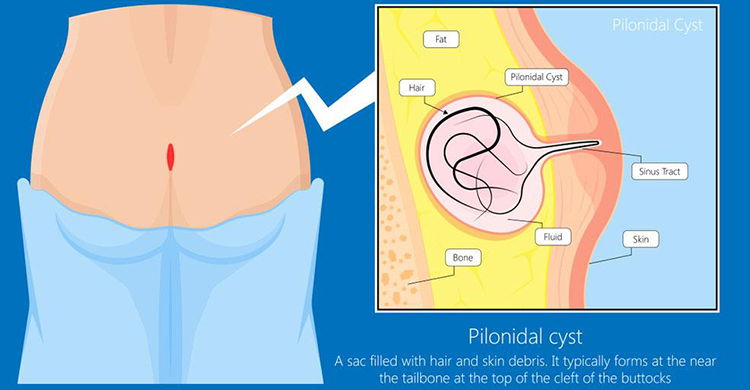
A pilonidal sinus (PNS) is a tiny skin hole or tunnel. It might swell up with liquid or pus, leading to the development of a cyst or abscess. The buttocks' upper cleft is where it develops. Hair, grit, and debris are frequently seen in pilonidal cysts. It may be quite painful and frequently becomes infected. It could leak pus and blood and have a bad stench if infected.

What are the causes

PNS's specific etiology is unknown; however, it is thought to be a mix of altering hormones (since it develops after puberty), hair growth, friction from clothing, and prolonged sitting. Sitting might force the hair developing in the region to re-enter the skin by creating friction.

Similar to how it would respond to a splinter, the body responds to this hair as alien and mounts an immunological attack. Your hair cyst is a result of this immunological reaction. A person may occasionally have several connected sinuses under their skin.

What are the symptoms?

Infection warning symptoms include:

  • Discomfort when standing or sitting.
  • Cyst enlargement in size.
  • Skin nearby that is irritated and inflamed.
  • A bad smell is brought on by pus or blood seeping from the abscess.
  • Hair poking out from the wound.
  • The development of many sinus tracts or skin holes.

How to prevent it?

By regularly cleaning the affected region with mild soap, ensuring all soap is gone, keeping the area fully dry, and avoiding prolonged sitting, you can stop PNS from occurring again.

What are the non-surgical treatment options?

Treatment for a PNS will depend on the factors:

  • you're signs
  • the sinus's size
  • whether this is your first sinus infection or whether it persists Some of the common non-surgical treatments for Pilonidal Sinus are:
  • Antibiotics: A broad-spectrum antibiotic is likely to be prescribed by your doctor if your condition is identified early on, you don't have significant pain, and there are no symptoms of inflammation. A large variety of microorganisms can be treated using a broad-spectrum antibiotic.
  • Phenol injection: Your physician will first provide a local anesthetic before this sort of therapy. They will next inject phenol, an antibacterial chemical component, into the cyst. It might be necessary to repeat this treatment numerous times. The lesion will eventually get harder and closer due to this therapy.

What are the surgical treatment options?

Lancing:

By performing this surgery, an abscess, or a buildup of pus inside the sinus, is relieved of its symptoms. Your doctor will administer a local anesthetic before this treatment. The abscess will subsequently be opened using a knife. Any hair, blood, or pus found inside the abscess will be cleaned away.

Your doctor will advise surgery if you experience recurrent PNS or have more than one sinus tract. A local anesthetic will initially be administered to you. Once the pus and debris have been removed, the surgeon will open the lesions. The physician will heal the incisions with stitches when this procedure is finished. Your surgeon will review how to change the bandages after surgery and advise shaving the area to stop hair from growing into the wound.

Call Call Us
WhatsApp WhatsApp